How Sterilization Affects Medical Tubing: EtO, Gamma, E-Beam and Steam
Each sterilization method stresses tubing materials differently. A practical look at EtO, gamma, e-beam and steam, which polymers tolerate which, and how to plan for it.
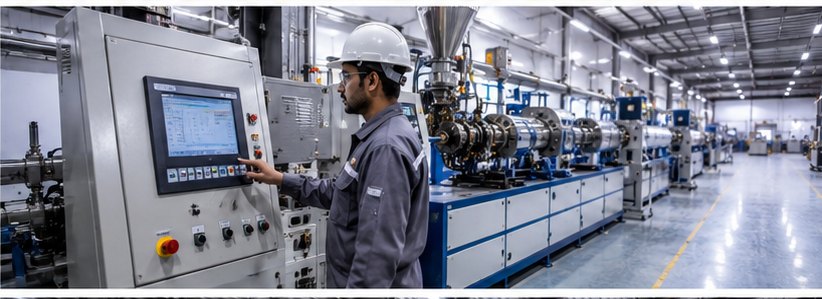
A medical tube is usually extruded, cut, assembled and packaged, and only then sterilized. That last step is easy to treat as a box to tick at the end, but it can change the material. Radiation can embrittle or yellow some polymers. Heat can deform others. Gas methods leave residues that have to be cleared. If the sterilization method is not considered when the material is chosen, a tube that passed every test as extruded can fail after it is sterilized.
The four common methods
For a general primer on how each method kills microorganisms, the overview of sterilization on Wikipedia is a good starting point. What follows focuses on what each method does to the tubing itself.
Ethylene oxide (EtO)
EtO is a gas that kills microorganisms at relatively low temperatures, typically somewhere around 30 to 60 °C, with controlled humidity. Because it is gentle on materials, it is compatible with almost every tubing polymer, which is why it remains so widely used for complex devices.
The downside is residuals. EtO and its by-products can remain in the material after the cycle, so devices go through an aeration period to let them out, and residual levels are limited by standards (ISO 10993-7 covers EtO residuals specifically). Thick walls and absorbent materials hold more gas and need longer aeration. The process itself is governed by ISO 11135.
Gamma radiation
Gamma sterilization uses a cobalt-60 source. It penetrates deeply, works on sealed packaging and leaves no residue, which makes it attractive for high-volume disposables. The catch is that radiation breaks or cross-links polymer chains, and materials respond very differently:
- PTFE is badly affected. It loses strength and becomes brittle even at typical sterilization doses, so PTFE components are usually sterilized another way.
- PVC tends to discolor, turning yellow or brown, though grades with stabilizers are available for gamma use.
- Polypropylene can embrittle over time unless a radiation-stabilized grade is used.
- Polyurethanes, silicone, PEBA and nylons are generally tolerant at normal doses, though properties should still be verified.
Effects can also continue after the dose, as oxidation slowly progresses, so shelf-life testing matters. Radiation methods are covered by the ISO 11137 series.
Electron beam (e-beam)
E-beam is also radiation, but delivered as a fast, high-dose-rate electron stream rather than slow gamma exposure. The short exposure time generally means less oxidative degradation than gamma for the same dose, and throughput is high. The limitation is penetration: electrons do not go as deep, so dense or thick packaged loads may not receive an even dose. For thin-walled tubing in suitable packaging, it is often a good fit.
Steam (autoclave)
Steam at 121 to 134 °C is cheap and residue-free, but it is hard on thermoplastics. Many tubing materials soften, distort or lose dimensional stability at those temperatures. Silicone handles steam well, which is one reason it is common in reusable tubing. Most PVC and many TPU grades are poor candidates for repeated autoclaving.
A quick compatibility view
| Material | EtO | Gamma | E-beam | Steam |
|---|---|---|---|---|
| PVC | Good | Fair (may yellow) | Fair | Poor |
| TPU | Good | Good | Good | Poor to fair |
| Nylon / PEBA | Good | Good | Good | Fair |
| Silicone | Good | Good | Good | Good |
| PTFE | Good | Poor | Poor | Good |
| Polypropylene | Good | Fair (use stabilized grade) | Fair | Fair |
Treat this as a starting point, not a substitute for testing. Grade, additives, wall thickness and dose all shift the result.
Planning for sterilization early
The practical lesson is to choose the sterilization method alongside the material, not after it. A sensible sequence:
- Decide the likely method based on the device, volume and packaging.
- Shortlist materials that are known to tolerate it.
- Run trial lengths through the full cycle and test mechanical properties, color and dimensions afterward, not just before.
- Re-test after aging, since radiation effects can develop over months.
Trial material does not have to come off the production line. Many teams extrude short evaluation runs on a small lab extruder first, sterilize those samples, and only then commit a compound to full-scale production. It is a cheap way to find out that a grade yellows or embrittles before a whole line has been set up around it.
The takeaway
Sterilization is part of the material decision. EtO is gentle but needs aeration; gamma is convenient but can degrade PTFE, PVC and polypropylene; e-beam is faster with less oxidation but limited penetration; steam suits silicone far better than most thermoplastics. Pick the method and the polymer together, then test samples after sterilization and after aging, and the tube that leaves the extruder will still be the tube you designed by the time it reaches a patient.